More use from each preparation
Return eligible mobile phase to the working reservoir and reduce the fresh volume needed for suitable repeated methods.
ANTECH SOLUTIONS · RESOLVE
Recover suitable flow from isocratic HPLC runs. Put it back to use, with less fresh solvent to prepare and less liquid waste to manage.
HPLC mobile-phase recovery · Application support from Antech
Download the PMBrc white paper ↓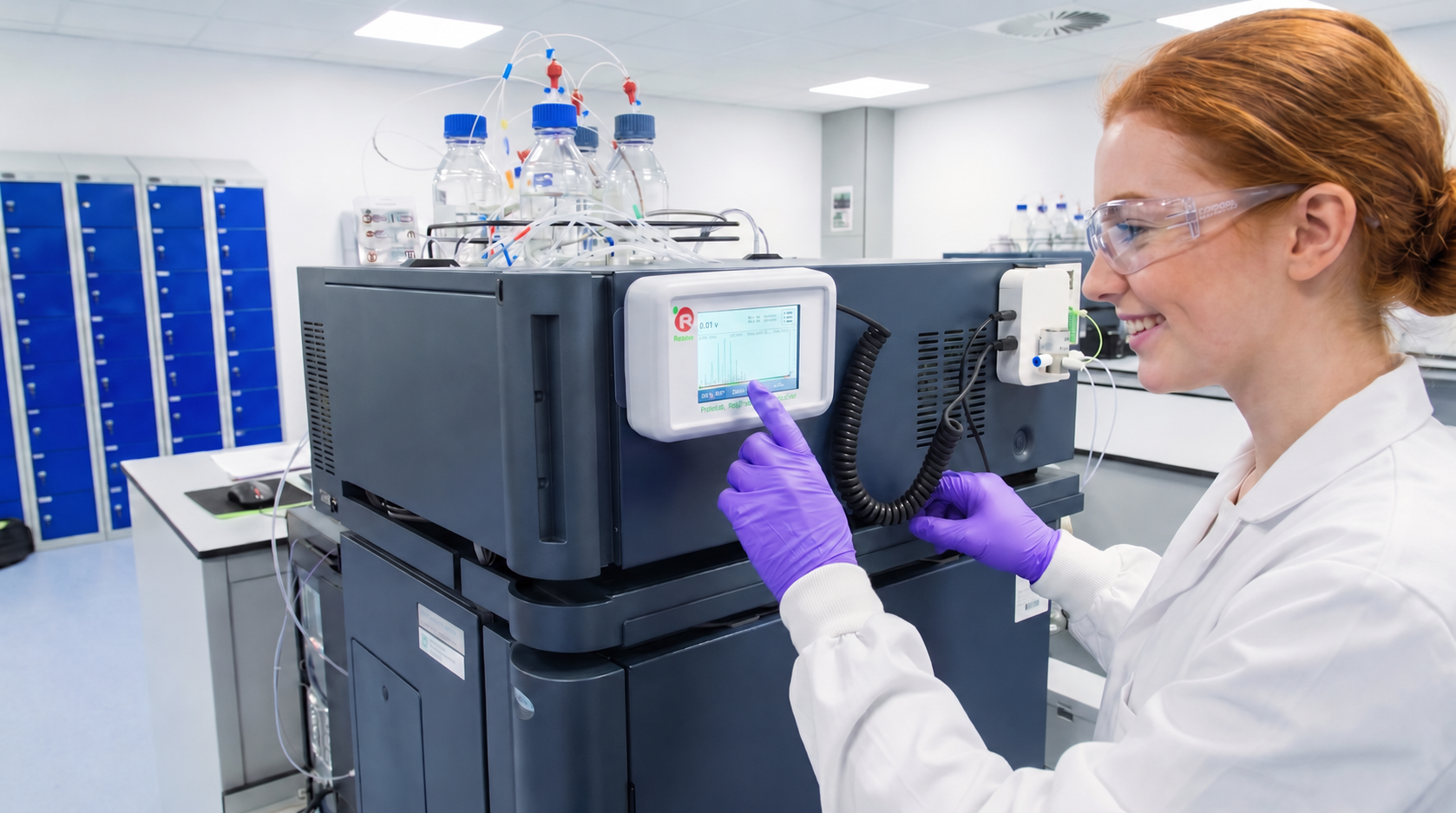
THE 67-SECOND STORY
Discover the recovery principle, the equipment and the opportunity to reduce everyday solvent handling.
Introducing ReSolve · Antech Ireland · 1 minute 7 seconds. Recovery and reuse depend on the method.
THE RECOVERY PRINCIPLE
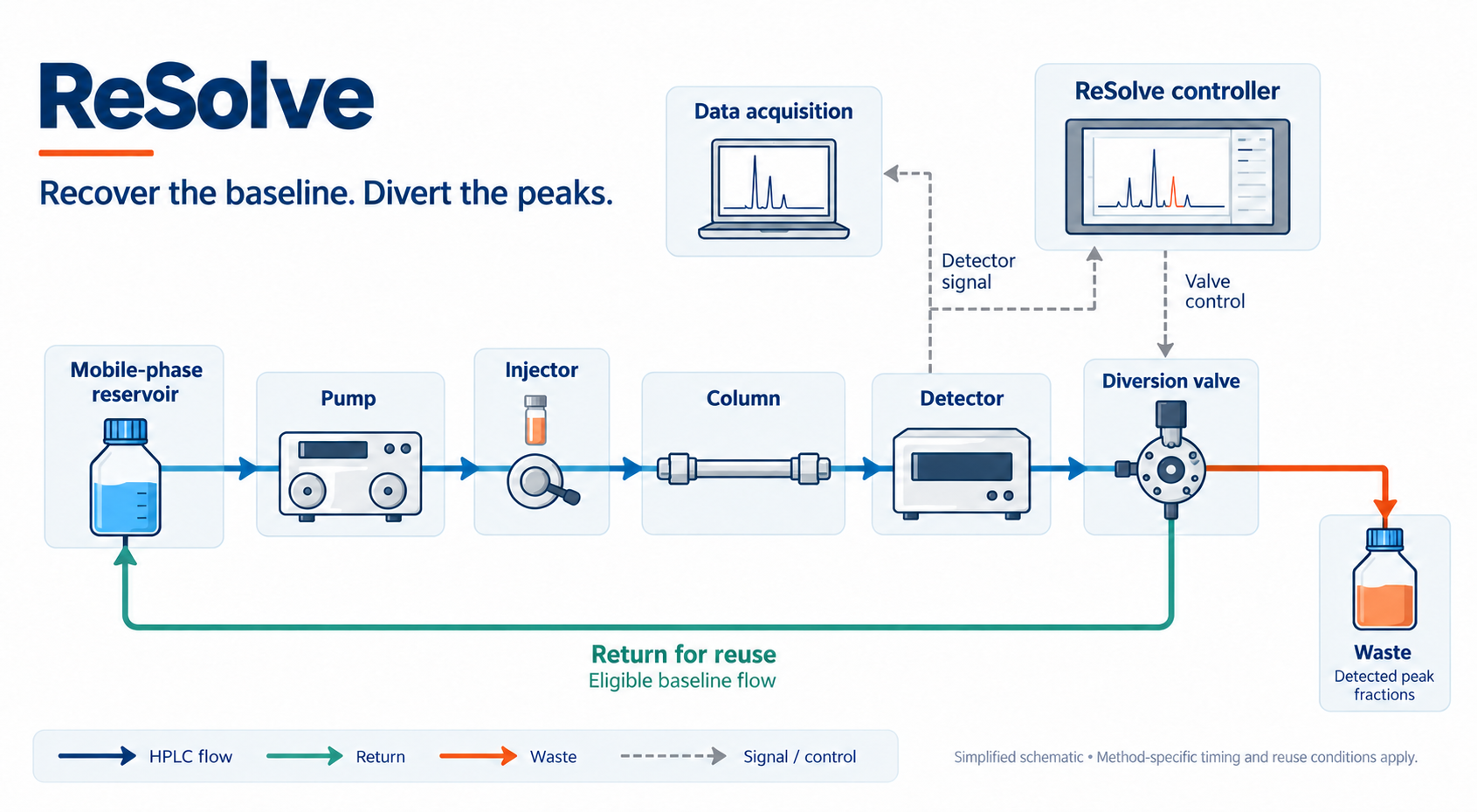
ReSolve uses the detector signal to control a valve after the detector. Selected flow returns for reuse; detected peak fractions go to waste.
Eligible baseline flow returns to the reservoir within the approved reuse method.
Peak fractions go to waste, including the configured timing margin.
Detector-to-valve delay and peak margins are configured for the method. ReSolve routes the liquid; it does not purify it.
THE EVERYDAY LABORATORY BENEFIT
Make suitable repeated methods work harder for your laboratory.
Return eligible mobile phase to the working reservoir and reduce the fresh volume needed for suitable repeated methods.
Separate peak fractions from recoverable flow and measure the reduction in waste across the complete workflow.
Extend the use of a suitable preparation, reducing reservoir refills and waste-bottle handling.
Include top-ups, purging, cleaning, replacement and eventual disposal in your assessment. Recovery percentage and total cost saving are different measures.
CONTROL YOU CAN SEE
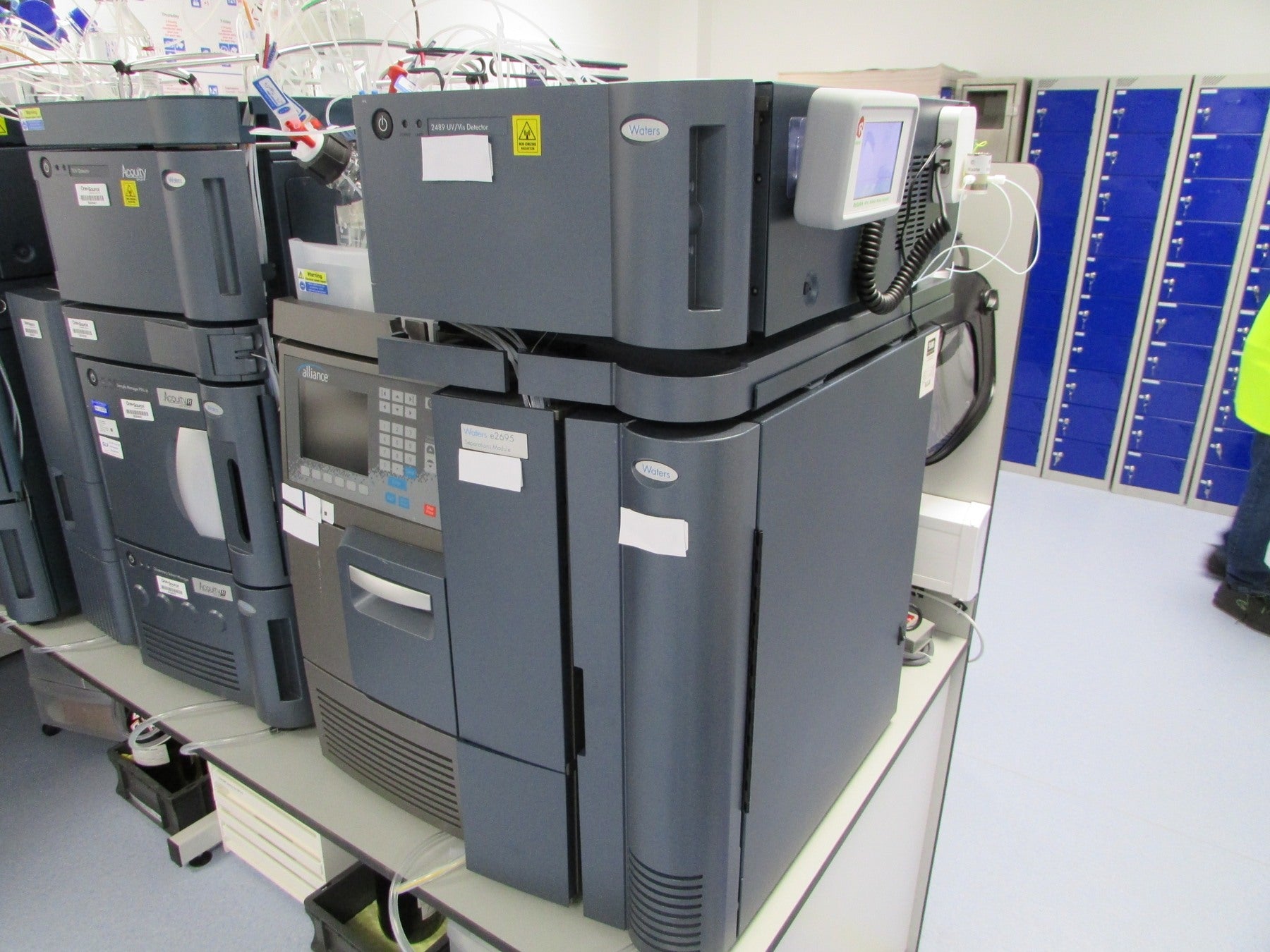
The 4-inch touchscreen shows the detector trace and operating state. Injection logs and audit trails keep recovery events available for review.


Independent performance evaluation
PMBrc · South East Technological University
reported recovery
In each of two tested sequencesTHE EVIDENCE BEHIND RESOLVE
Explore the method, recovery data and chromatograms in PMBrc’s independent performance evaluation of ReSolve, commissioned by Antech Solutions.
PDF · 24 pages · PMBrc / SETU
No form required. Open the full report and save your copy.
Two sequences each contained 96 injections; the second used mobile phase recovered from the first. The study reported comparable observed chromatographic metrics with fresh and recovered starting mobile phase.
Paracetamol/ibuprofen method; buffer, acetonitrile and methanol at 75:24.5:0.5 v/v/v. PMBrc / SETU, final report Rev 4.0, 22 July 2026. Results apply to the tested sequences; they do not establish a universal recovery rate, formal statistical equivalence or unlimited reuse.
MATCH THE PRODUCT TO THE METHOD
Start with a suitable isocratic method, the actual detector output and a representative chromatogram.
Prioritise repeated isocratic methods with a stable mobile phase and useful baseline intervals. Review the full sample matrix, detector response and permitted reuse period. The study does not establish suitability for gradient HPLC or SFC.
Tell us your HPLC system and detector, the mobile-phase composition and flow rate, your sample matrix, a representative chromatogram and the number of runs you perform. We will help you plan an evaluation for your workflow.
EXPLORE THE EVIDENCE
See the study behind the results, then explore what ReSolve could mean for your laboratory.

 Look inside the white paper ↗
PMBrc / SETU · INDEPENDENT PERFORMANCE EVALUATION
Get the full picture of how ReSolve was evaluated. The 24-page white paper brings together the experimental method, measured recovery and chromatographic results.
More ways to explore
LET’S TALK ABOUT YOUR LABORATORY
Bring your method and workload. Antech will help you assess suitability and plan a ReSolve demonstration.